


Ever notice a bump on your wall that wasn’t there before? That bulge might be a simple nail pop you can fix this afternoon, or it could be warning you about hidden water damage that’ll wreck more drywall if you ignore it. The difference matters because patching over moisture or structural movement just buys you a few months before the problem comes back worse. This guide walks you through identifying what’s actually causing your bulge, then shows you exactly how to fix it so it stays fixed.
Quick Fix for Nail Pops: The Most Common Bulge Solution

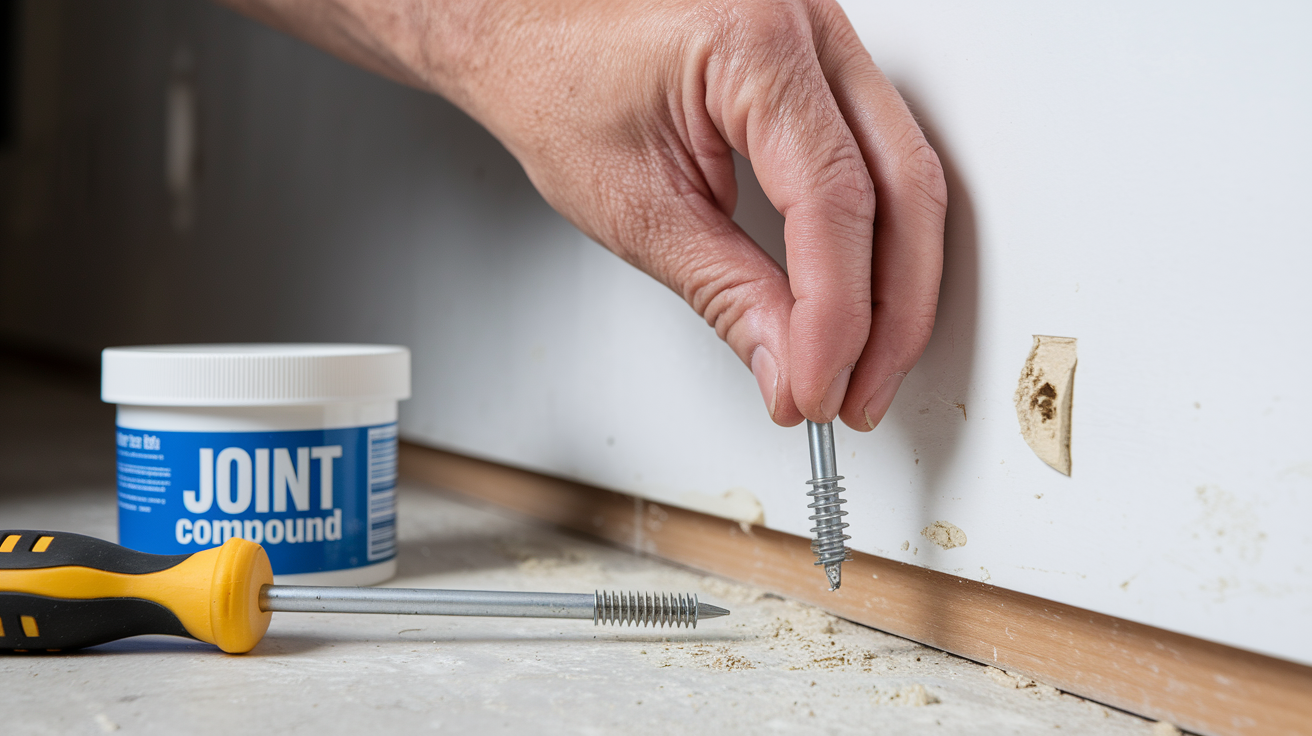
About 70% of drywall bulges come from popped nails or screws. It’s the easiest fix you’ll face, and most homeowners can knock it out in an hour or two.
Here’s how you fix it:
- Drive the popped fastener slightly below the surface using a nail set, or just pull it out completely if it won’t stay down
- Install a new drywall screw 2 inches above and 2 inches below where the old fastener popped. Drive it into the stud until you get a slight dimple without tearing the paper
- Spread a thin coat of joint compound over the dimpled screw heads with a putty knife
- Wait 2 to 4 hours for it to dry, then lightly sand and apply a second coat. Feather the edges outward so they blend
- Once that’s dry, sand with 220 grit, wipe it clean, prime, and paint to match
Now, not every bulge is a nail pop. Here’s how to figure out what you’re actually dealing with:
Is the bulge discolored or does it feel soft? You’ve got moisture problems. Fix the water source first.
Does the bulge follow a seam line between drywall sheets? That’s a tape problem where the joint compound or tape pulled away from the wall.
Are there multiple bulges in a pattern, especially with cracks spreading outward? Structural movement. You need to get that evaluated before you touch anything cosmetic.
Is the bulge large (over 6 inches across) or does the drywall crumble when you press it? The whole damaged section needs replacement.
Is it a small raised bump that feels firm when you press it? Probably a nail pop. That’s the simplest repair covered throughout this section.
Use these questions to jump straight to the section that matches your situation. If you’re dealing with a basic nail pop, you can fix it this afternoon with materials you might already own.
Identifying and Addressing Moisture-Related Drywall Bulging
Water damaged drywall shows specific warning signs. The area looks discolored with yellow, brown, or dark stains. When you press on it, the surface feels soft or spongy instead of firm. You might notice a musty smell, especially in closed spaces.
Before you touch the drywall, inspect these common moisture sources:
Roof leaks around chimneys, skylights, or deteriorated flashing
Plumbing leaks behind walls, under sinks, around toilets, near water heaters
Bathroom exhaust fan failures that let humid air condense inside walls
Basement seepage or condensation from poor drainage or missing vapor barriers
HVAC condensation line issues where drain lines clog or disconnect
Exterior water intrusion around windows, doors, or through damaged siding
If you suspect mold growth behind the bulging area, wear a respirator mask, safety glasses, and gloves before you cut into anything. Mold often grows on the back side where you can’t see it until you open the wall.
You have to eliminate every moisture source completely before you repair the drywall. Fix the leaking pipe. Repair the roof. Improve ventilation. Then wait. The wall cavity and surrounding materials need to be bone dry, which typically takes 24 to 72 hours with fans and dehumidifiers running. Rush this step and the bulge returns within weeks. You can’t paint or compound over dampness and expect it to hold.
Complete Drywall Section Replacement for Severe Bulging
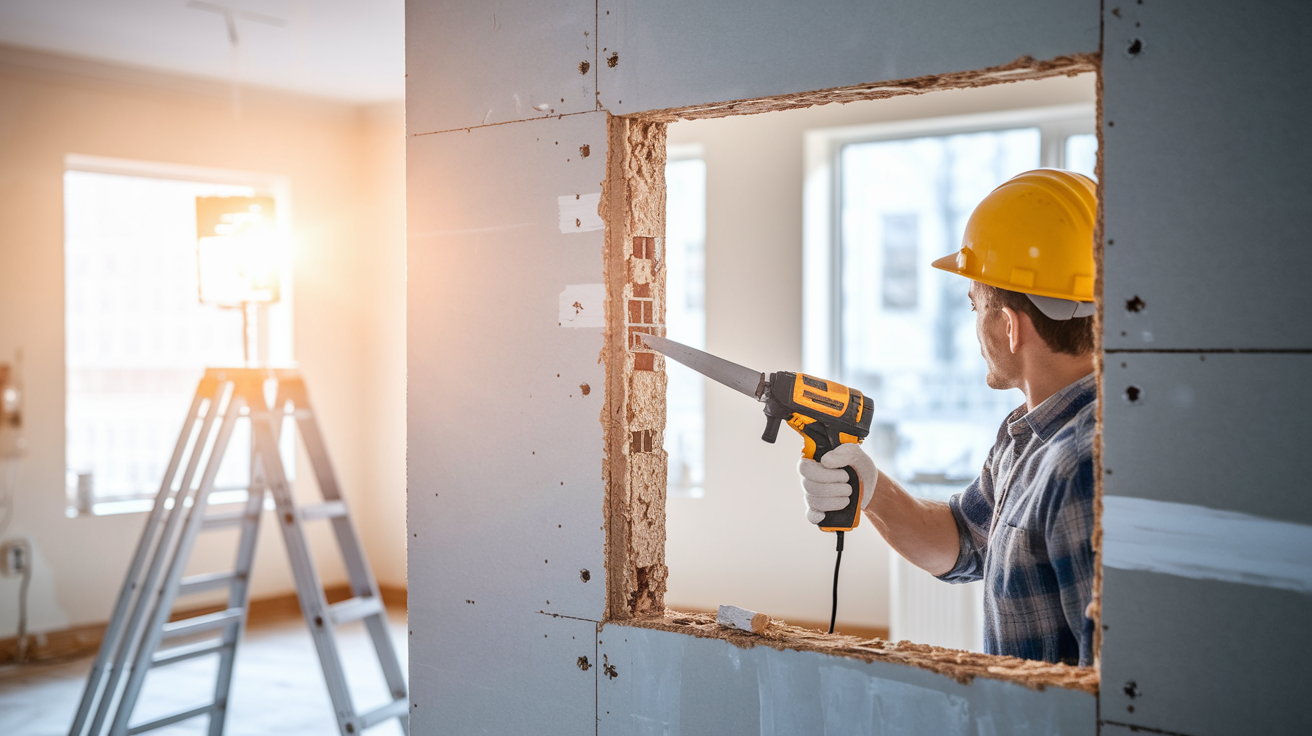
Full section replacement becomes necessary when water damage is severe, when bulging areas exceed 6 inches across, or when the drywall feels soft and crumbles under light pressure. Patching won’t work because the material’s structural integrity is shot.
Cutting Out the Damaged Drywall
Start by marking a square or rectangular area around the damaged section. Use a stud finder to locate the studs on both sides of the damage, then extend your cut lines to the center of those studs. This gives you solid backing to attach the new piece.
You’ll need a utility knife or drywall saw, stud finder, pencil, dust mask, gloves, and safety glasses. Score along your marked lines multiple times with a utility knife if you’re cutting through painted drywall. For thicker cuts or areas with multiple layers, a drywall saw works faster.
Remove the damaged section carefully. Once it’s out, look inside the wall cavity. Check for additional moisture, mold on the insulation or studs, or any other damage that needs attention before you close things up.
Installing Backing Supports and New Drywall
If your cut edges don’t land perfectly on stud centers, you’ll need to install backing boards. Use 1×3 or 1×4 lumber as horizontal backing along the vertical edges. Slide these boards behind the existing drywall and secure them with drywall screws driven through the existing drywall into the backing board.
You’ll need replacement drywall cut to size, backing boards (if needed), drywall screws, and a screw gun or drill. Measure the opening and cut your replacement piece 1/8 inch smaller than the opening. This slight gap makes fitting easier and won’t show after taping.
Position the new drywall piece and secure it to the studs and backing boards with drywall screws every 8 inches. Keep screws at least 1/2 inch from the edges. Drive each screw just below the surface to create a slight dimple, but don’t break through the paper facing. That paper layer is what holds the screw.
Taping and Finishing the Patch
The finishing process requires drywall tape (paper or mesh), joint compound, a 6 inch putty knife, a 10 inch putty knife, sandpaper in 120 grit and 220 grit, primer, and paint.
Apply drywall tape over all seams where the new piece meets the existing wall. Immediately cover the tape with a thin coat of joint compound using your 6 inch knife. Press firmly to embed the tape completely and get rid of air bubbles. This first coat doesn’t need to look perfect.
Wait a full 24 hours for complete drying. Apply a second coat with your wider knife, extending the compound 8 to 10 inches beyond the first coat. Feather the edges by angling your knife and using less pressure as you move away from the center.
Most repairs need a third coat for a seamless finish. Extend this coat 12 inches wide, feathering even further. After this coat dries completely, sand smooth starting with 120 grit sandpaper for high spots, then finish with 220 grit for a smooth surface. Wipe away all dust with a damp cloth, apply primer to seal the joint compound, and paint to match your wall.
Fixing Bulging Drywall Tape and Seam Issues
Bulging along drywall seams appears as a linear raised area running between two drywall sheets. This happens when tape wasn’t properly embedded during installation, when the drywall surface was dusty and prevented good adhesion, or when moisture got behind the tape and broke the bond.
Here’s how to fix it:
- Use a utility knife to cut away the loose or bubbling tape section. Cut back to where the tape is still firmly attached.
- Scrape off the old joint compound back to bare drywall using a putty knife. Remove all loose material.
- Lightly sand the area and wipe it completely clean. Any dust left behind will cause the new tape to fail just like the old tape did.
- Apply a thin layer of joint compound to the seam. Immediately place new drywall tape over the wet compound and press it firmly into place using your taping knife. Pull the knife along the tape with firm, steady pressure to embed it completely and squeeze out excess compound.
- After the first coat dries (24 hours), apply a second coat 8 to 10 inches wide. Feather the edges by gradually reducing pressure as you move the knife outward.
- Apply a third coat 12 inches wide after the second coat dries. When this final coat dries, sand it smooth, prime, and paint.
Proper technique makes the difference between a repair that lasts and one that bubbles again next year. Keep your taping knife at a low angle to the wall, use light to moderate pressure, and apply thin coats. Three thin coats applied correctly create a stronger, flatter finish than one thick coat. Move your whole arm and body rather than just bending your wrist. This gives you smoother, more consistent pressure across the entire stroke.
When Structural Issues Cause Drywall Bulges

Most drywall bulges are straightforward cosmetic repairs. But some bulges point to underlying structural movement that must be addressed before any cosmetic work begins.
Watch for these warning signs that indicate potential structural problems:
Multiple bulges or cracks appearing in a pattern across different walls or ceilings in the same area
Diagonal cracks running from the corners of doors or windows toward the ceiling or floor
Gaps appearing where walls meet ceilings or floors, especially gaps that widen over time
Doors or windows that suddenly stick or won’t close properly when they used to work fine
Sagging ceilings with accompanying bulges rather than isolated raised spots
Visible foundation cracks, particularly horizontal cracks or stair step cracks in block foundations
Bulges that reappear after proper repair, indicating ongoing movement
Homes naturally settle during the first few years after construction as lumber dries and soil compacts. But continued movement in older homes points to foundation issues, expansive soil problems, or water infiltration affecting the structural supports underneath. Changes in soil moisture from unusual weather patterns, new drainage issues, or even large tree roots can shift foundations and create pressure points that push walls out of alignment.
Attempting cosmetic drywall repairs without addressing structural causes guarantees the damage will return. Worse, covering up the visible symptoms can mask serious safety issues that need immediate attention. If you see multiple warning signs, stop the cosmetic work and get a foundation inspection before proceeding.
Finishing Techniques: Sanding, Priming, and Painting Repaired Drywall
Proper finishing makes the difference between a repair that blends invisibly and one that shows every time the light hits the wall. This stage requires patience through multiple steps, but rushing produces visible results you’ll regret.
Sanding technique matters more than the amount of time spent. Use 120 grit sandpaper for initial smoothing to knock down high spots and ridges. Switch to 220 grit for your final pass to create a smooth surface ready for primer. Sand in small circular motions with light pressure. Heavy pressure creates grooves and dips that show after painting. A sanding sponge gives better control than sandpaper alone, especially for feathered edges. Wear a dust mask, and when you think you’re done sanding, wipe the entire area with a slightly damp cloth. You’ll see dust you missed.
Always apply drywall primer over bare joint compound. This step is not optional. Paint absorbs into porous joint compound at a different rate than it absorbs into the paper facing on drywall. Without primer, you get visible “flashing” where the repair shows as a dull or differently textured spot even though the surface is perfectly flat.
For painting, use paint from the same batch as your existing walls if you saved any. Even the same paint color mixed on different days can show slight variations. Feather your new paint several feet beyond the repair area using light, overlapping strokes. If exact color matching proves difficult, consider repainting the entire wall from corner to corner. The slight color variation won’t show between different walls, but it shows clearly in the middle of one wall.
If your existing wall has texture, replicate it before the final paint coat. Orange peel texture comes from thinned joint compound in a spray bottle. Knockdown texture requires applying small globs of compound with a roller, then lightly flattening the peaks with a trowel.
Preventing Future Drywall Bulges and Bubbling

Preventing drywall bulges costs less and creates less disruption than repairing them. Most prevention focuses on controlling moisture and following proper installation practices when repairs become necessary.
Moisture management starts with maintaining indoor humidity between 30% and 50%. Use a dehumidifier in humid climates or during wet seasons. Use a humidifier in dry winter climates to prevent excessive shrinkage. Extreme swings in either direction stress drywall and the fasteners holding it.
Make sure bathroom and kitchen exhaust fans vent to the outside, not into attic spaces where moisture condenses on cold surfaces. Run bathroom fans during showers and for 20 minutes afterward. Fix any plumbing leaks the same day you discover them. Small drips become big problems. Maintain proper grading around your foundation so water drains away from the house rather than pooling against basement walls.
When installing or repairing drywall, follow these practices:
Use drywall screws instead of nails for better holding power and less chance of pops as wood studs shrink
Space fasteners 12 inches apart along studs and ceiling joists for adequate support
Avoid overdriving fasteners, which breaks the paper facing and reduces holding strength
Allow proper drying time between joint compound coats, minimum 24 hours even if the surface feels dry to the touch
Use factory tapered edges at seams rather than cut edges whenever possible, since the tapered depression accommodates tape and compound without building above the wall surface
Conduct regular visual inspections of walls and ceilings every three months. Look for early signs of bulging, water stains, or hairline cracks. Small issues caught early take minutes to address. Those same issues ignored for months become hours long repairs.
Cost and Time Estimates for Bulging Drywall Repairs
Repair costs vary significantly based on damage extent, root cause, and whether you handle it yourself or hire professional help. Understanding realistic estimates helps you budget appropriately and decide which approach makes sense.
| Repair Type | DIY Cost | DIY Time | Professional Cost |
|---|---|---|---|
| Nail/screw pops | $5-15 | 1-2 hours | $100-200 |
| Small patch repair (under 6 inches) | $15-30 | 3-4 hours over 2 days | $150-300 |
| Large section replacement | $40-80 | 6-8 hours over 3 days | $300-600 |
| Full wall skim coat | $50-100 | 8-12 hours over 4 days | $500-1200 |
| Water damage with source repair | $100-500+ | Varies widely | $800-3000+ |
These time estimates include mandatory drying periods between joint compound coats. You can’t speed up drying time without compromising the repair quality. Each coat needs 24 hours minimum before sanding and applying the next coat.
Professional repairs often complete faster because experienced contractors work efficiently and know exactly how much compound to apply for proper coverage without excess buildup. They also own specialty tools like automatic taping tools and corner rollers that speed the process.
Costs increase substantially when repairs involve more than just the drywall itself. Fixing the moisture source that caused water damage adds plumbing repair or roof work costs. Mold remediation requires special procedures and disposal. Structural repairs to address foundation movement or framing issues must happen before drywall work begins. These underlying problems often cost more than the visible drywall repair, but skipping them means the drywall damage returns.
When to Call a Professional for Drywall Bulge Repair

Many drywall bulge repairs are appropriate DIY projects. But certain situations require professional expertise for safety, quality results, and long term success rather than temporary patches that fail.
Call a professional when you encounter these scenarios:
Visible mold growth or musty odors that indicate hidden mold behind the wall requiring proper containment and removal
Extensive water damage affecting multiple walls, large areas, or entire rooms
Suspected structural movement or foundation issues indicated by multiple cracks, sticking doors, or recurring bulges
Bulges on ceilings where overhead work creates safety concerns and requires proper staging
Inability to locate the moisture source despite clear evidence of water damage somewhere
Recurring bulges that return after previous repair attempts, indicating the root cause wasn’t addressed
Large areas requiring skim coating for smooth finish, a specialized skill requiring trained hands
Situations where building permits may be required for structural work or extensive repairs
Professionals bring specialized equipment you don’t own. Moisture meters detect dampness inside walls before it becomes visible. Thermal imaging cameras locate active leaks behind finished surfaces. These tools identify root causes that remain hidden during visual inspection.
Experience matters in drywall finishing. A professional can apply joint compound in smooth, thin layers that amateur DIYers struggle to replicate. They know how to feather edges invisibly and match existing textures. The difference shows in the final result, especially under angled lighting that highlights every imperfection.
Early professional assessment often costs less than failed DIY attempts. When homeowners patch the visible damage without addressing moisture sources or structural issues, the problem returns. Then they pay for professional work anyway, plus the cost of removing the failed DIY repair before starting over. For complex situations, get an evaluation before you start cutting. Learn more about professional drywall repair services and what qualified contractors can offer.
If you’re dealing with significant moisture damage beyond isolated bulges, the problem likely extends into structural areas requiring comprehensive assessment. Professional water damage repair addresses not just the visible drywall issues but the hidden moisture, potential mold, and structural concerns that create those surface symptoms.
For questions about your specific situation or to schedule an assessment, contact RestoreSafeHome to discuss your repair needs and receive guidance on the best approach for your home.
Final Words
Bulging drywall is usually fixable once you identify the root cause.
Most nail pops and small tape issues are straightforward DIY projects. Just remember to address moisture sources before you patch anything, or the problem will come back.
For bigger jobs or when you see warning signs of structural movement, bring in a pro. How to fix bulging drywall starts with honest diagnosis, not guesswork.
Take your time with the finish coats and drying, and your repair will blend right in.
FAQ
How do you fix bulging drywall?
To fix bulging drywall, first identify the cause: nail pops need new screws and joint compound, moisture damage requires source repair and section replacement, lifting tape needs re-taping, and structural issues require professional assessment before cosmetic repairs.
What causes drywall to bulge?
Drywall bulges are caused by popped nails or screws from wood shrinkage, water damage softening the paper layer, improperly applied joint compound and tape, or structural movement creating pressure points that push the drywall outward.
How do you fix bulging walls?
To fix bulging walls, drive popped fasteners below the surface, install new drywall screws into studs, apply thin coats of joint compound in multiple layers with complete drying between each, then sand smooth and paint to match surrounding areas.
How do you get rid of a drywall bubble?
To get rid of a drywall bubble, cut away the bubbled section with a utility knife, remove loose material back to solid drywall, apply new joint compound or tape if needed, then finish with multiple thin coats, sanding, and painting.
Do you need to dry out water-damaged drywall before repairing bulges?
Yes, water-damaged drywall must dry completely before repairs, which takes 24 to 72 hours with fans and dehumidifiers. Repairing wet drywall causes recurring bulges, mold growth, and wasted effort because moisture continues damaging the material underneath.
Can you repair drywall bulges without replacing the entire section?
You can repair small drywall bulges from nail pops or minor tape issues without replacement by adding fasteners and applying joint compound. Large bulges, soft areas, or water damage require cutting out and replacing the damaged section completely.
How many coats of joint compound do drywall repairs need?
Drywall repairs need 2 to 3 coats of joint compound with complete drying between each layer, usually 24 hours. Each coat should be wider than the previous one, feathering edges outward for a smooth, invisible blend with surrounding surfaces.
Should you use mesh tape or paper tape for drywall seam repairs?
Paper tape creates stronger, flatter seams when properly embedded in joint compound and works well for most repairs. Mesh tape is easier for beginners and works on small patches, but creates slightly thicker seams and requires more compound to hide.
What are warning signs that a drywall bulge indicates structural problems?
Warning signs include multiple bulges in patterns, diagonal cracks from corners, gaps where walls meet ceilings, doors suddenly sticking, sagging ceilings, visible foundation cracks, and bulges that reappear after proper repair attempts.
Do you need to prime repaired drywall before painting?
Yes, always prime repaired drywall because joint compound absorbs paint differently than paper-faced drywall, creating visible “flashing” spots. Drywall primer seals the compound and ensures even paint absorption for an invisible repair.
How do you prevent drywall bulges from happening?
Prevent drywall bulges by maintaining indoor humidity between 30 to 50 percent, fixing plumbing leaks immediately, using drywall screws instead of nails, spacing fasteners properly along studs, and conducting quarterly visual inspections for early problem detection.
When should you call a professional for drywall bulge repairs?
Call a professional for visible mold, extensive water damage, suspected structural issues, ceiling bulges, unlocatable moisture sources, recurring bulges after repairs, large areas needing skim coating, or any situation where permits may be required.